Skip to content

Posts from the ‘Dil Seçeneği / Language Selection’ Category

A dance-time-machine

Theresa Steininger

A Mary Wigman Dance Evening has brought the choreographies of the founder of the German Ausdruckstanz to today´s stage.

Why would a young man today dance solos that a 43-year old woman had done in early 30ies? Do we already need a living dance museum of modern dance, as Martha-Graham-Company-leader Janet Eibler suggested in an interview concerning her dancers` tour to Austria? If yes, young Ecuadorian dancer Fabian Barba, currently working in Brussels, can join it. He has put together an evening reconstructing important choreographies by Mary Wigman, founder of the German Ausdruckstanz. In his „A Mary Wigman Dance Evening“, he offers the audience the possibility to go back in history, also having the aim not only to copy and reconstruct, but to build something of his own. The difficulty of such a time-machine-performance is that the audience will more likely see the evening as a chance to imagine Mary Wigman dancing in front of them, not so much concentrating on the elements Barba has brought in.

So you surely will come up with the question if this evening is a creation or a carrying out. The audience will certainly notice how accurate Barba brings in typical elements of Wigman, but not see it so much as a creation of Barba´s.

In what concerns this accuracy, Barba has really worked very precisely. He has perfectioned Wigmans way of gliding, he has studied very accurately how she used breath for her choreographies, he brings in the praying hands in „Anruf“, the snake-like arm in „Gesicht der Nacht“, the strong and flowing arm-movements in „Sturmlied“. He has the costums, playing a huge role in Wigman´s solos. From the program, you may learn that Barba has worked with videos as well as with former students of Wigman, he has prepared very precisely. But when after each solo, he copies Wigman´s very self-confident, almost arrogant way to bow, you cannot be sure any longer, if he is just copying or ironizising it. A strange taste also remains, when until one of the last pieces, nobody gives an applause when Barba bows.

When you see this performance, you can sometimes not be totally sure if it is Barba or Wigman performing. If this was the performer´s aim, he has surely come up to it.

Theresa Steininger

Anat Eisenberg and Mirko Winkel – Life and Strive

Maxime Fleuriot

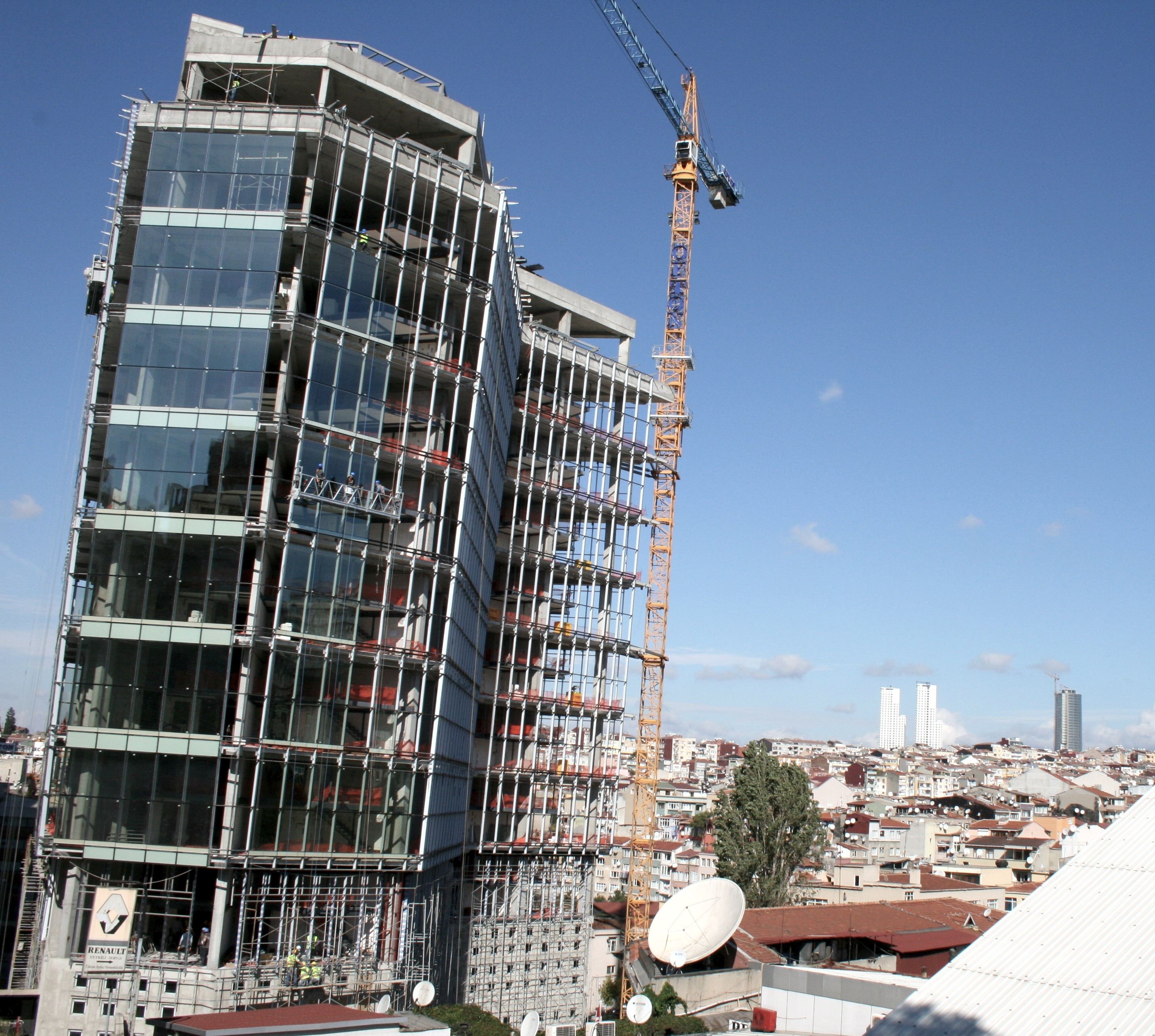
Life and Strive is not a play nor a performance. It’s an orginal artistic proposition made by two young artists Anat Eisenberg and Mirko Winkel for a limited group of people (around 15 persons). The public meet the two artists on the top floor of a luxury hotel in the center of Istanbul. There, in front of the city view, the two artists explain their project : they show the biggest tower of the city to the audience, a residential project which construction is about to be completed. They invite the public to visit the apartements, pretending they are interested in buying one. And so it goes. Divided in two small groups, the members of the public are brought there in a van an soon go through a visit of apartments which they will never be able to afford (the prices range between 1.2 million dollars and seven million). Everything here is big and made for the richest : the view is breathtaking, the apartments are huge ; a golf, a swimming pool and a supermarket are under construction. What makes many people dream of discloses many terryfying aspects : the tower has everything of a golden cage. The view is breathtaking but no one can open a window ! What is interesting in this situation is that the members of the public are pretending. This self distance increases the feeling one has that everything that is seen and heard in this building project is fake (the building, the salesmen…). Unfortunately it is not. The role of the artists in Life and Strive is quite limited : they put the public in a situation they just chose. Difficult to call that a piece or a performance. But the content of it is interesting enough to be worth it.

A Mary Wigman dance evening by Fabián Barba

Martina Rösler

In A Mary Wigman dance evening, the young Ecuadorian choreographer Fabián Barba is dealing with the “historic” figure Mary Wigman, one of the pioneers of expressionistic dance in Europe. He graduated from P.A.R.T.S. (Brussels) in 2006 with a first version of his occupation with Mary Wigman. For this performance Barba chose nine solos out of the dance cycleShifting Landscape (1929) as well as parts from Visions(1928,1925) and Celebration (1926) and put them together.

A playbill in the style of the 1930’s, two crystal chandeliers, a red nostalgic curtain, as well as delicate background music are trying to create an atmosphere that aims to bring the audience back to the original event. The constant changing of light and black (which also means light in the auditorium), defines the structure of the evening. One solo after the other is presented to the audience, followed by taking a deep bow after each short dance.

Taking a closer look at the movement quality, the following words occur to me: rhythmical swinging of the body, strong and powerful gestures, changing of tensions, turning, body weight and gravity, expanding in space throughout the materiality of the costume. The whole pathos and emotionalism seems nowadays quite overacted and excessive, but the way how Barba is performing makes it possible for the spectator to overcome this first sensation. The fact that a male body is representing an original female body is also changing the spectators gaze.

As written in the program, Barba is trying to breath new life into some of the dances of Mary Wigman. But can an absent body which is not available anymore be revitalised? In that regard the problematic of re-enactment becomes an issue. Questions concerning authorship and the affiliation between the original and the copy arise immediately. In addition to using photographs, fragments of video recordings, texts as his research source, Barba also worked with contemporary witnesses Katharine Sehnert, Irene Sieben and Susanne Linke. The process of reconstruction can also be considered as a process of communication. Barba presents a detailed, serious and accurate reconstruction of Wigmans solos, but maybe there is a lack of an attempt to translate and transfer the original into the context of contemporary dance and art today.

Posted by

Failing the invisible theatre

Iulia Popovici

Istanbul Sapphire is a residential building in the heart of the city’s business area. A block of flats. It’s high – “the highest residential building in Turkey and in the whole Europe” (it has 54 floors), covered in glass, remarkably ugly and equally expensive. It’s a future gated community, where the owners will have exclusive access. Only potential buyers are allowed inside, to visit some of the common areas, the furnished model apartment on the 33rd floor and the terrace on the top of the building. So two artists – Anat Eisenberg and Mirko Winkel, both living and working mainly in Germany – decided that the audience to their newest project, Live and Strive, should assume the role of potential buyers in order to have access to Istanbul Sapphire – and a number of other upper class residential projects, as a matter of fact.

The real-estate agent doesn’t know who these seven (eight?) people are. We know the situation is not genuine, we know we are performing roles. It could be the ideal condition for a performance of invisible theatre (a form of socially-engaged theatre developed by the late Augusto Boal, meant to emulate reality in order to raise consciousness towards social inequities) except for the fact that the participants are not professional actors, there is no script and no consciousness involved. (But yes, there was a moral/ ethical issue: why misleading the otherwise honest real-estate agent? Just to expose the secret life of rich people?) Even if the potential of the theme is quite generous: living in a building like Istanbul Sapphire resembles to waking up, every day, in a jar (a 1.2 to 7.3 million dollars per apartment jar), with the perspective of never leaving it, going in your slippers 30 floors downstairs in order to spend your evening in front of a TV with other several bored nouveaux riches and socializing with the guy bringing you the food ordered from the restaurant some other 30 floors below. The newest technology and a pointless existence – in his movies, Jacques Tati described it better than anyone else.

If the text you’ve just read looks more like a society column in a more or less socialist-liberal newspaper, it’s because the Live and Strive experience of the author herself was least of all a performative one. But maybe ethical challenges are part of everybody’s personal dramaturgy of the self.

CRITICAL ENDEAVOR 2010 PROGRAM


Seminar 1TEXTS, INTERPRETATION, AND CRITICISM


Gurur Ertem | 18&19.10.2010 | 11:00 – 18:00 | MSUFA Bomonti Campus Dance Department


Keywords: Interpretation, hermeneutics, criticism, performativity, performative writing, author, authority, reader


The “truth” or the “meaning” of a text/performance is not hermeneutically sealed. One arrives at an understanding of performance through a dialogical process of interpretation. Considering criticism as an interpretive endeavor and as an open process, this introductory seminar aims to build a reflexive understanding of what it means to interpret a text/performance. In our discussions we will be interrogating the differences and/or the distances between a review, criticism, and analyis. We will also explore the ways in which one can articulate informed judgment and analytical opinion yet remain accessible.


Gurur Ertem is a sociologist, dramaturge and curator. She is the co-founder of Bimeras Cultural Foundation and is the artistic director of the Istanbul based contemporary dance and live arts festival iDANS. She is the co-editor—with Şebnem Selışık Aksan—20.Yüzyılda Dans Sanatı: Kuram ve Pratik (Boğaziçi Üniversitesi Yayınları, 2007); the editor of Çağdaş Dansta Solo? In Contemporary (Bimeras 2009), and the co-editor—with Noémie Solomon—of Dance On Time! (Bimeras, 2010). As a doctoral candidate at the New School for Social Research in sociology, she is researching on whether or not one can consider the contemporary dance scene as a transnational “art-world”.


Seminar 2THEATRICALITY OF THE PERFORMING ARTS

Jean-Marc Adolphe | 20&21.10.2010 | 11:00-18:00


Theatre, dance and visual arts have entered a process of hybridization in their respective fields. In the performing arts, staging and choreography are being shaken up and challenged by the “performing”. Consciously or not, a whole history of the art-performance is called up and recycled. But the “performance”, which was uniquely transgressive, has always rejected theatricality. There is indeed a new fusion going on, between the moment of the action and the time for the “rehearsal/repetition”. Which tools could we use to evaluate interdisciplinary creations that come from this dynamic? As far as the critic is concerned, we need to question the pertinence of aesthetics: when we look at something, what does the reflection tells us?


Jean-Marc Adolphe is a critic, writer/essayist and artistic counselor. He runs “Mouvement”, a French interdisciplinary magazine, which he founded in 1993 (www.mouvement.net). Moreover, he has worked for many international theatres and festivals. He is also in charge of SKITE, a laboratory which focuses on search and artistic creation; the 5th edition just finished and brought together for a month 80 artists in Caen (France).


Seminar 3WATCHING BEFORE JUDGING


Pieter T’Jonck |22&23.2010 | 11:00 – 18:00 | MSUFA Bomonti Campus Dance Department


This seminar focuses on the way one works with the material of the performance itself to make a critical text. It is about the importance of watching accurately before judging. Subsequently, it is discussed how this analysis can bring forth broader considerations and an evaluation of a choreography through comparison within and without the dance field.


Pieter T’Jonck is an architect, but equally active as a dance and theatre critic for various media since 1983 such as Veto (1983-85), De Standaard (1985-2000), De Tijd (2001-06), De Morgen (since 2006) and Klara (since 2006). Besides, he published regularly about performing arts, architecture and urbanism in journals such as EtceteraDWBBallettanz and A+, and contributed to books. After 25 years of continuous activity as a newspaper critic, T’Jonck has become an indispensable witness of the performing arts in Flanders and elsewhere.


Lecture (Open to the general public): COSMOPOLITANISM, AGONISTIC POLITICS AND ARTISTIC PRACTICES


Chantal Mouffe |23.10.2010 | 17:00 | Pera Museum Auditorium


The world-renowned political theorist Chantall Mouffe will examine if her critique of the cosmopolitan approach in the field of politics is also valid in the cultural field or if it is possible to envisage a form of cosmopolitanism suited to artistic practices.


Chantal Mouffe is Professor of Political Theory at the Centre for the Study of Democracy at the University of Westminster in London. She has taught and researched in many universities in Europe, North America and South America and she is a corresponding member of the Collège International de Philosophie in Paris. She is the editor of Gramsci and Marxist Theory(Routledge and Kegan Paul, London, 1979), Dimensions of Radical DemocracyPluralism, Citizenship, Community (Verso, London, 1992) Deconstruction and Pragmatism (Routledge, 1996)and The Challenge of Carl Schmitt, (Verso, London, 1999); the co-author with Ernesto Laclau of Hegemony and Socialist StrategyTowards a Radical Democratic Politics (Verso, London, 1985) and the author of The Return of the Political (Verso, London, 1993), Le politique et ses enjeux (La Decouverte/M.A.U.S.S, 1994), The Democratic Paradox (Verso, London, 2000) and On the Political(Routledge, London, 2005).

Seminar 5: REGIMES OF DESCRIPTION: HOW TO CREATE DANCE WITH WORDS


Franz Anton Cramer |24&25.10.2010 | 11:00 – 18:00 | MSUFA Bomonti Campus Dance Department


The act of describing is an essential factor for writing “about”. Description was part of the canonical system of rhetoric. It is a poetic tool. And it is a scientific procedure. In dance and performance writing, the descriptive materialization to a large extent creates, brings into being its object: Dance. The lecture-workshop tries to reflect on this pivotal element and analyses some strategies of description that are important in and for dance appreciation. The title alludes to two important readings: The seminal book by J. L. Austin on “Speech Act Theory” (How to Do Things with Words, 1962), and the publication of the proceedings of an international conference held at Princeton University on the subject Regimes of Description: In the Archives of the 18th Century (2005). Both might be an important element of preparation. Works presented within the iDANS festival will serve as examples and as “case studies” for the workshop sessions. Participants’ own descriptive writing will also be a topic.


Franz Anton Cramer, PhD, is fellow at the “Collège international de philosophie” in Paris. He studied Spanish Language and Literature, Art History and Theater at Berlin’s Free University. In 2003/4 he was managing director of the Dance Archives in Leipzig, from 2004 to 2006 researcher in residence at the Centre national de la danse, Paris. Since 2007 he is also project coordinator for the Dance Heritage program launched by Tanzplan Deutschland. A visiting professor with the study program Contemporary Dance, Context, Choreography (BA) at University of the Arts in Berlin until March 2010, he contributes regularly to the specialized press and holds workshops on the history of contemporary dance, dance criticism, and related issues. In 2008 he published the book Total Freedom. Cultures of Dance in France between 1930 and 1950.


Seminar 5: DESCRIPTION CONTINUTED


Ayşegül Sönmez|26.10.2010 | 11:00 – 18:00 | MSUFA Bomonti Campus Dance Department


In this session, we are going to be expanding our descriptive vocabulary based on some tasks and inquire the ways in which visual art criticism and dance criticism differ (or not), and what particular criteria are needed to evaluate both.


Ayşegül Sönmez is an art critic, columnist and lecturer. She is the International Art Critics Association (AICA) – Turkey’s ex-president, and the jury member of Kyoto Awards in Arts, 2010. She is the editor of Unjust Provocation an exhibiton book, 2009 and currently lectures at Okan University, İstanbul. Sönmez studied Itailan Language and Literature at the University of Istanbul and received her MA degree from the Visual Arts Faculty of Marmara University. Her theses was about Turkish Modernism in painting between 1908-1954. She is currently writing her PhD titled “The Light of the Kitchen; Public and Private in Turkish Painting in 20. Century” at the same faculty.

Seminar 6ASIAN DRAMATURGIES


Tang Fu Kuen |27.10.2010 | 11:00 – 14:00 | MSUFA Bomonti Campus Dance Department


In this seminar, we will review texts on Asian performance registers that are not normative to western spectatorship. We will also discuss the effective ways to look at and write about works that challenge aesthetic conventions and our non-knowing, and limn the possibilities of fair interpretation and evaluation.


Tang Fu Kuen is a critic, cultural dramaturge, and a curator. Since the late nineties he is writing dance criticism for Singapore’s main newspaperThe Straits Times and the magazine The Arts Magazine. He is also affiliated with European specialized magazines such as Ballet Tanz andPerformance Research. Tang Fu Kuen conveys in these media clear statements on interculturalism in dance and performance, but explicitly from an Asian point of view. He curated the Singapore Pavilion in Venice Biennale 2009, presenting artist Ming Wong who won Special Mention. He is the co-curator of the In-Transit Festival in Berlin in 2010.


Seminar 7: ROUNDTABLE


Guest speakers from the local scene|27.10.2010 | 15:30 – 18:00 | MSUFA Bomonti Campus Dance Department


We identify the current problems of art criticism in the local context and brainstorm about the possibilities and promises of different media in producing and disseminating dance and performing arts criticism.

Seminar 8: DISCUSSION AND WRAP UP


28.10.2010 | 11:00 – 14:00 | MSUFA Bomonti Campus Dance Department


Session 8: DISCUSSION AND THE DECISION FOR THE AWARD(S)


31.10.2010 | 15:00 – 18:00 | MSUFA Bomonti Campus Dance Department
Posted by Guru

CRITICAL ENDEAVOR 2010

Critical Endeavour is an educational program for emerging dance and performance journalists that took place for the first time during ImPulsTanz 2008 in Vienna. It is part of the new European initiative Jardin d’Europe―a multi-annual project funded partly by the European Commisson’s Culture Programme 2007-2013―that was developed by its 10 network partners: Ultima Vez (BE), CCN Montpellier (FR), Workshop Foundation (HU), Lokomotiva (MK), Station (RS), Art Link (RO), Cullberg Ballet (SE), Bimeras Culture Foundation (TR), Southbank Centre (UK), danceWEB (AT). Critical Endeavour’s aim is to enhance public discourse on dance and to promote exchange about practices, ethics, and responsibilities in criticism within the respective countries and contexts.

Description of Critend 2010:


I read an article on me once that described my machine-method of silk-screen copying and painting- ‘What a bold and audacious solution, what depths of the man are revealed in this solution!’ What does that mean? Andy Warhol

Contemporary practices in the field of dance and performance―at times infiltrating into and at other times being contaminated by related questions in other artistic and expressive fields―question, challenge and expand the boundaries of what constitutes the “choreographic”. We witness the “contemporaneity” of current live art practices and performative interventions as sites where the margins are blurred, often rendering territorial disciplinary demarcations insufficient, if not irrelevant. Granted that, within the Critical Endeavor 2010 seminars/encounters/talks, we search for the ways in which we can catch up with, contribute to, and multiply the questions and to reflect on the creative possibilities rising from such cross-pollinations. Herein, we pay particular attention to facilitating an informed yet accessible discourse and writing on contemporary dance and performance practices.

In line with the broader festival theme, cosmopolitanism, we consider whether or not it is possible to achieve and maintain a cosmopolitan perspective in performance writing and criticism. We exchange reflections on critical writing with local and transnational writers, journalists and theoreticians from visual arts criticism, music criticism and literary criticism in order to extend our vocabulary and practice of writing in/around/for contemporary dance.

The objectives of Critend can be summarized along two major axes:


• Acquiring expertise and working tools for journalistic, essayistic, and theoretical writing on dance via reading and writing assignments, discussions and public presentations;

• Working towards an ethics of evaluation by nominating a designated number of laureates among a group of 10-14 emerging choreographers featured in the Prix Jardin d’Europe series as part of the festival.


The participants of the Critical Endeavor who were nominated by the ten project partners from their respective countries are: Eylül Akıncı (TR), Bükki Nóra Ildikó (HU), Iulia Popovici (RO), Julie Rodeyns (BE), Lisa Caroline Smith (UK), Theresa Elke Christine Steininger (AT), Josefine Wikström (SE), Maxime Fleuriot (FR), Dean Damjanovski (RS), Iva Nerina Sibila (MK).Critend 2010 seminars are led by Gurur Ertem (Coach&Facilitator, TR), Jean-Marc-Adolphe (Mentor, FR), Franz Anton Cramer (Mentor, DE), Pieter T’Jonck (Mentor, BE), Ayşegül Sönmez (Mentor, TR),Tang Fu Kuen (Mentor, SG), and will be assisted by Ayrin Ersöz (Previous Critend Participant) and Berna Kurt (Previous Critend Participant, TR). In 2010, Critical Endeavor is hosted by Bimeras within the context of iDANS International Contemporary Dance and Performance Festival, in collaboration with Mimar Sinan University of Fine Arts, Department of Modern Dance.

Fabian Barba – A Mary Wigman Dance Evening

Lise Smith

A silver-clad figure struts across the stage, hands akimbo, to the sound of Chinese gongs. Ecuadorian dance artist Fabian Barba is performing an evening of solos by Mary Wigman based on her first tour of the United States, and the effect is uncanny – Barba inhabits not only Wigman’s choreography but her costumes, her delicate hand gestures, and her somewhat mannered facial expressions.

The performance comments on the enactment of a feminine persona on stage, but Barba resists the urge to camp it up. Dressed in female costume (but not in drag – he has shaved neither leg nor torso hair and wears no makeup) Barba enacts the graceful hip shifts and wrist flicks of Wigman’s short solos, effectively becoming the choreographer herself for the duration of the performance. The material is shown cabaret-style, with a costume change and a musical intermission between each piece, immersing the audience in the chandelier-lit 1930s ambience of the setting.

The movement palette is minimal; Wigman/Barba favours simple stepping patterns up and down the stage, shaping the space with liquid arms and hand flourishes that often appear oriental or tribal. One striking sequence,Sturmlied, features the performer in a diaphanous red cape covering the face, whirling the fabric through the air like dust in a sandstorm. FinaleDrehmonotonie finds Barba circling incessantly about the centre, pacing the stage like a caged beast in a silver ballgown.

Special mention must go to Sarah-Christine Reuleke for her loving recreations of Wigman’s costumes, a procession of backless silk gowns, Egyptian-inspired wraps and elegant shawls that are as fascinating to watch as the choreography itself.

Strange and oddly-mannered at first, the Wigman style has by the end of the performance become familiar, the final encore welcome. Just as Barba takes on the persona of Wigman in his enactment of her choreography, so we in the audience, gradually warming towards this unaccustomed style, become identified with her earlier audiences. This thoughtful, multi-layered recreation reveals the performance as not mere historical artefact but as a constant and living process refracted through both audience and performer.

Posted by LiseS