Skip to content

Posts from the ‘Inceleme / Review’ Category

fatboy slim exc.

Julie Rodeyns

We all know we shouldn’t judge people on the first eye, but still to often we do. Spike Jonzes proves us wrong in a video clip for ‘Weapon of choice’ by Fatboy Slim. The American filmmaker introduces us to a business man in tie and costume, sitting in an archair, looking a bit bored. All of a sudden, he starts making little tic mouvements with his head, as if suddenly he fell under some kind of spell. When he next stands up from his chair, he immediately starts dancing to the (…) music in a very confident, energetic and upfront way- facing the camera as much as possible. Soon, he starts taking bigger leaps, dancing his way through the hallways, jumping on a table where he tries out some tapdance moves, .. At the pique of his dance, he jumps from the second floor into the air, sailing to a huge painting in the lobby of the hotel. The painting shows three boats, sailing away under a cristal blue skye. Not only is the guy trough his dancing exploring the physical space (and we with him), he now also takes us to a possible imaginative mental space- away from the dreary interior of the hotel lobby. Just for a short moment tough, because soon enough the guy in a superman-ly way lands back on the floor again. Nevertheless, when he again takes up his initial position, we can never look at him in the same way anymore then we did. Even your everyday grey yuppie guy is not always what he seems like.

Eyeing Dance

Eylül Akıncı

Christopher Walken’s swing solo in Spike Jonze video Weapon of Choice is so playful and animated –as much as the music is- that it tags the camera behind him, rather than trying to squeeze into its frame. The visual richness of the environment (which is the halls and lobbies of a big and prestigious looking hotel) with hazy and pastel colors is quite fitting to the genre contextually. There is a cinematic quality resulting from the different plans and scenes, as well as the use of invisible ropes to “magically” fly Walken in the air. Although the music is not conventional swing, it provides the proper rhythm for dance, and in turn swing dance is successful to show the song’s funkiness.

By her solo in Water Motor filmed by Babette Mangolte, one can feel that Trisha Brown is creating colors and movement in the monochrome video which is shot in single plan and angle. Camera follows her movements in linear direction in right-left axle. The picture does not have much contrast and sharpness, and it is in tones of grey. Trisha Brown’s movements, especially in the second slow motion part, creates relieves on the plain background and floor. Her choreography is very dynamic with frequent jumps and turns, and it is even more pronounced with the visible waves of her hair and clothes during the second half. The camera seems to move very slightly, yet thanks to double framing it discloses the multiplicity of movements, thus contributing to the motion in a very subtle way.

An Essay on Invisibility

Iulia Popovici

(since I’m feeling so guilty for missing today, here you are a text about the Rimini Protokoll performance I saw a week ago; be as critical as you like)

Abdulah (Mr. Dağaçar), Aziz, Mithat and Bayram are experts. They have very precise working hours, they know everything about the object of their activity; they are the best in their field for expertise.

Abdulah, Aziz, Mithat and Bayram are professionals. Experts in trash. Some would call (and are calling) them scavengers. Every day, they cross the Turkish capital with their self-made sort of carriages, in search for recyclable „left-overs“ – paper, cardboards, plastic, aluminum (a nice word for mainly Coca-Cola and Fanta cans). They are the invisible people. Read more

Show me a little bit of your dance

Theresa Steininger

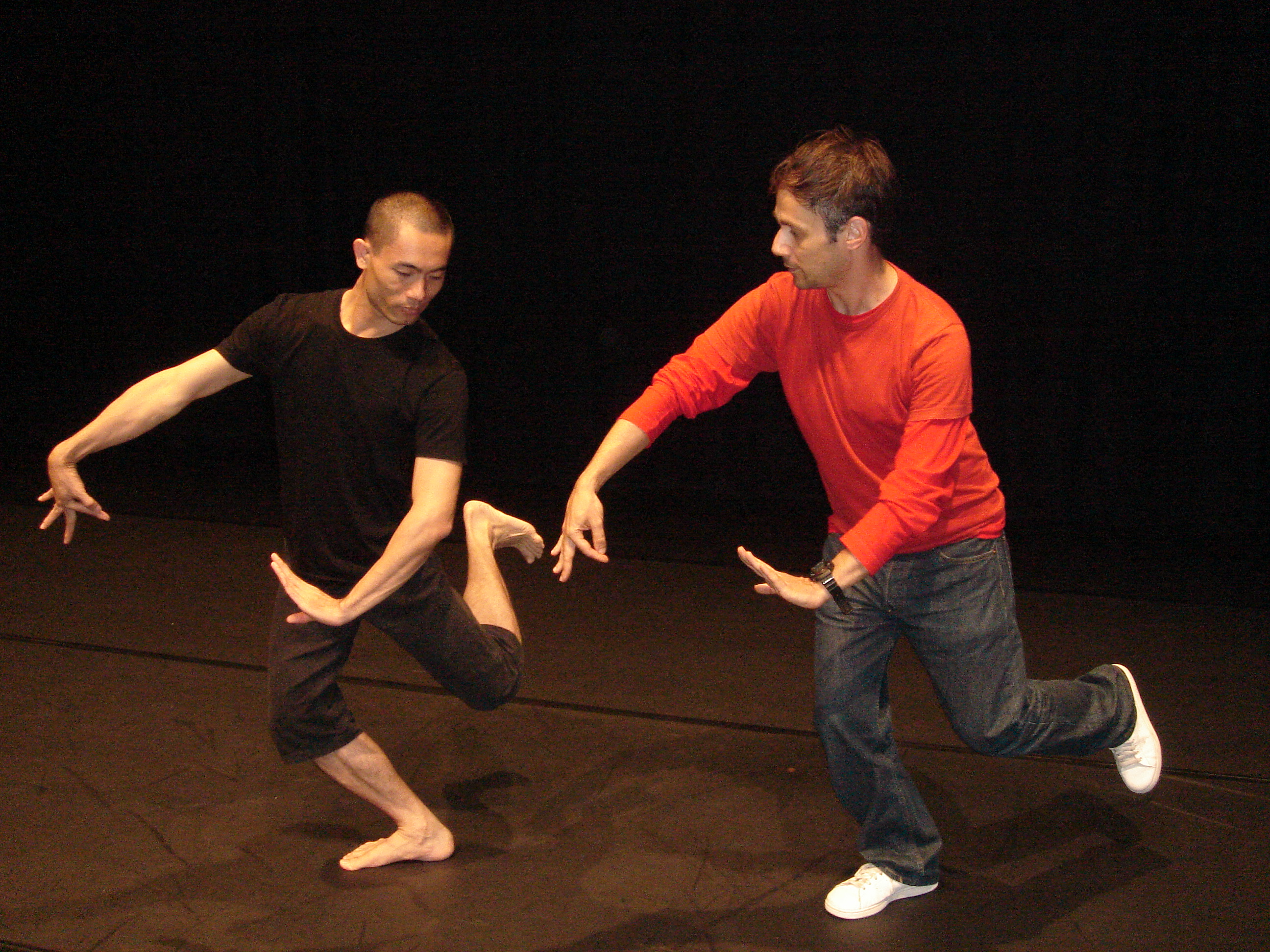
Can you show me a little bit of what your dance is like? This question, posed once by the French choreographer Jerome Bel to the Thai dancer Pichet Klunchun, then vice versa, is the base of the piece “Pichet Klunchun and Myself”  by Bel. The two performers sit on chairs profile to the audience, facing each other, Bel with pen and paper in hand, when asking Klunchun to present first himself and then elements of Khon dance. Klunchun, dressed all in black and barefoot, rises his foot and stamps loudly, presents arm movements, explaining the differences between the port de bras of the four main characters when being asked by Bel. While watching, Bel often frowns, looks and asks naively as a child, sceptically. Together with Bel, the audience learns about how to show grief and death on a Thai stage, walking slowly and drawing tears on the face with the finger. The spectators are shown how to distinguish between prince and princess and how the feeling „relaxed“ is presented through a headmovement forming an eight. Bel asks the questions we would probably pose ourselves. Playfully, Klunchun includes Bel into his presentation when having him being the one to die when Klunchun shoots an arrow in his direction.

After an hour, the vice-versa-version starts. Now it is Klunchun´s turn to question, what are strong elements of Bel´s performances. When Bel shows him as scene in which he does not do more than looking at the audience, Klunchun openly expresses his disappointment. Bel goes on describing that he does not want to represent something on stage, but to show the audience reality. When then showing death on stage in his interpretation, Bel does karaoke with „Kiling me softly“ and finally drops on the floor. To this, he can relate, says Klunchun, when telling about his mother dying softly.

Throughout the piece, Bel and Klunchun also aim to point out the differences in their cultures, finding very little parallels like the role of the king in the development of the dance, but huge opposite opinion as on getting married before having a child. Still, most of the time is dedicated to exploring and trying to understand the other´s style.

a review i wrote 5 years ago on bel/ klunchun

Maxime Fleuriot

Comments (and critics) are most welcomed :


SOFA – Août 2005

Made in Thailand de J.Bel et Pichet Klunchun

(Présenté à Montpellier Danse et au Festival d’Avignon)

La pièce cosignée par Pichet Klunchun, danseur traditionnel thaïlandais, et Jérôme Bel est le résultat d’une commande passée au chorégraphe français. Tous deux ont décidé de mettre en scène leur rencontre initiale et de révéler l’abîme culturel qui les sépare. L’un est bouddhiste, pratique le « khon », la danse des masques – l’autre répugne à toute technique dansée et questionne les attentes du public. Le spectacle brode et s’amuse autour du thème de l’impossible rencontre (« c’est fou ce que nous sommes différents »). Mais sous couvert de donner la parole à l’autre, Bel orchestre toute la progression du dialogue et assène à son partenaire une leçon de choses sur les bienfaits de son esthétique avec des arguments pas vraiment convaincants. Le chorégraphe français prétend notamment défendre une position politique parce que sa danse pourrait être réalisée par n’importe qui ! Au lieu de répondre à la seule question qui ait quelque peu d’intérêt – pourquoi Bel refuse la danse – celui-ci s’en tient tout le long à une ironie divertissante. A contrario le corps de Pichet Klunchun est pleinement investi lors des trop rares passages dansés de la pièce. Ses mouvements de main sont exécutés avec une précision d’orfèvre. Le contraste entre les deux danses – celle du bouddhiste respectueux de son roi et celle du français athée et rebelle – propose une piste de réflexion intéressante : on aurait la danse de ses convictions religieuses et politiques. Dommage que la pièce se contente d’effleurer la question.

Swansong

Nóra Bükki Gálla


Another one of the experimental pieces presented by the iDans festival, 1:Songs blends sound, image and motion to create a multidimensional vision of what it means to be a woman. German theater maker Nicole Beutler devises a curious on-stage operation in which the feminine psyche is being dissected.

The performer, Sanja Mitrovic, hides behind a line of 5 microphones. In the background black and white photos are projected on a screen: a dark line of people, a woman running and falling to the ground. The images are shown from different angles, dissolving into black shapes and patches then zooming into focus again.

Music is the only companion of the performer in her lonesome voyage of emotions; Gary Shepherd’s pulsing machine-music ranges from soft pop tunes to a monotonous hammering. The performance resembles a concert, lyrics are taken from lines of tragic drama characters like Antigone or Medea. Like in a good concert, there is plenty of space for interaction with the audience (the performer says after the first shocking song: ‘Are you with me?’ or asks someone in the first row to sing with her). Mitrovic plays with her voice like it was an instrument: she screams, hisses, barks and howls as the dynamics of the piece requires.

Beutler uses a minimized movement vocabulary close to everyday gestures, conveying an ironic message: stylized, over-acted dancing between songs or robot-like motions when the performer sings about having a heart.

Like in a concert, the audience is rewarded by an extra song at the end. Thinking back we got the whole classic set of female conflicts of love and hate, desire and repulsion played out in words, gestures and screams, still the question remains whether we learned anything new about what it means to be a woman. Probably not.

Nijinsky revisited

Theresa Steininger

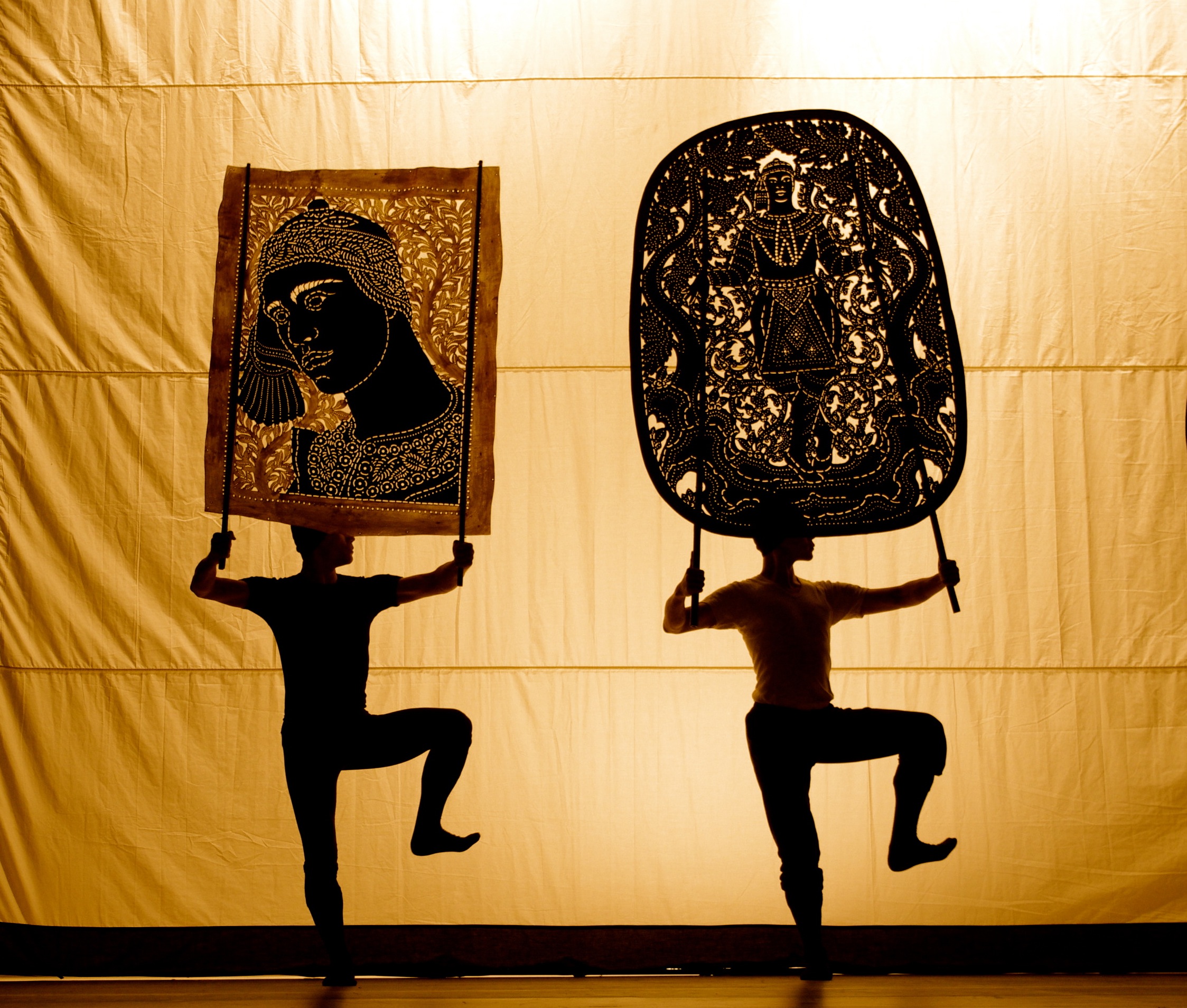
Slow Asian movements with flexed hands, angled legs and dynamic jumps: Not so uncommon for a Thai dancer. But when Pichet Klunchun in his piece „Nijinsky Siam“ perform these, he does not do so in the first place to show his own country´s styles, but to reconstruct the look the famous Ballet-russes-dancer Vaslav Nijinsky had on them 100 years ago. The audience learns that after having heard of a Siamese dance company having performed in Europe, Nijinsky created his famous „Danse Siamoise“, of which nowadays photos are the only thing to remain. With these, which are also projected on stage, Klunchun has not done a pure reconstruction, although it also is historically interesting, but, as he tells his audience via writings on the back wall of the stage, wants to give back a soul to Nijinsky´s famous solo. Inspired by what is to be seen on the photos, he does his own solo in the end of the performance. But he does even more than that. By projecting photos of Nijinsky fading into one another, he makes the Russian dancer kind of dance as well. And he has two other Thai dancers with him, Sunon Wachirawarakarn and Padung Jumpan, who support him to bring to stage what he thinks Nijinsky had been inspired by 100 years ago. So „Nijinsky Siam“ does not try to reconstruct a historical piece, but brings it on one hand back to its origins by having filtered the Siamese dances twice – once by Nijinsky, once now -, and on the other hand creating something new with all respect to the Ballet-russes-creator.